In our lives, we come across certain people whose traits irritate us in some way. This is because they never seem to notice the good qualities within us. No matter how much good we do, they always find faults in it. Moreover, we never even ask them to point out our mistakes. At times, such people start feeling unwanted to us.
Just as in writing, no matter how beautiful the handwriting is, our attention first goes to the erased words—the same applies to human nature. No matter how well we behave, people tend to notice our mistakes first. This is an essential aspect of human nature, which significantly impacts our personal, social, and professional lives.
No matter how beautiful the handwriting is, our attention first goes to the erased words—this is something we must acknowledge. However, we should also remember that mistakes in life are not failures but learning steps. Therefore, the right approach is to accept our mistakes, improve upon them, and move forward. And when others point out our mistakes, we should try to interpret them in a positive way.
- Human Tendency to Find Faults :-
The human brain quickly picks up on negative aspects. This trait has evolved over time as part of human survival instincts. In ancient times, people had to identify potential threats early to ensure their survival. Because of this, the brain focuses more on flaws, mistakes, or possible dangers rather than on positive things.
- Impact on Social Life :-
In society, a person’s mistakes often receive more attention than their good deeds. For example, if someone consistently does good things but makes a single mistake, people tend to focus only on that one error.
- In personal relationships – We may have treated someone well for years, but if we make a single mistake in our words or actions, people judge us based on that one instance.
- At the workplace – An employee may be hardworking, but if they make a mistake in a single project, their responsibilities may be reduced.
- In public life – Many well-known individuals contribute significantly to society, but a single mistake can damage their entire reputation.
- A Learning Perspective on Mistakes :-
If people constantly point out our mistakes, instead of being upset, it is better to adopt a learning mindset.
- View mistakes as opportunities for improvement.
- Ignore unnecessary criticism and focus on positive growth.
- Try to present the right side of your actions to others.
- Efforts to Change Society’s Mindset :-
If we want to change this mentality, we must start by shifting our own perspective on others’ mistakes.
- Focus more on what people have done right rather than their faults.
- Instead of just criticizing someone for their mistakes, give them a chance to correct them.
- Evaluate a person based on their overall journey rather than a single mistake.

“कितीही चांगलं काही केलं तरी लोक त्यात चुकाच शोधतात….!”
आपल्या आयुष्यात अशी काही माणसे येतात ज्यांच्या स्वभावगुणांबद्दल आपल्याला एकप्रकारची चीड असते. कारण त्यांना आपल्यामधील चांगले गुण कधी दिसतच नसतात. आपण कितीही काही चांगलं केलं तरी ते त्यात चुका काढतात. बरं, आपण त्यांना चुका काढण्यासाठी सांगितलेलं देखील नसतं. अशी माणसे आपल्याला काही वेळा नकोशी वाटू लागतात. अक्षर कितीही सुंदर असलं तरी खोडलेल्या शब्दांकडे आधी लक्ष जातं, हे जसं लिखाणाच्या दृष्टीने खरं आहे, तसंच मानवी स्वभावालाही लागू होतं. आपण कितीही चांगले वागलो तरी लोकांचं पहिल्यांदा आपल्या चुकांकडेच लक्ष जातं. हा मानवी स्वभावाचा एक महत्त्वाचा भाग आहे, जो आपल्या वैयक्तिक, सामाजिक आणि व्यावसायिक आयुष्यात मोठा प्रभाव टाकतो.
अक्षर कितीही सुंदर असलं तरी खोडलेल्या शब्दांकडे पहिल्यांदा लक्ष जातं, हे मान्य करावं लागेल. परंतु आपण हे देखील लक्षात घेतले पाहिजे की, जीवनातील चुका हे अपयश नसून शिकण्याचे टप्पे असतात. त्यामुळे आपल्या चुका स्वीकारून त्यावर सुधारणा करत पुढे जाणे हेच योग्य. आणि जेव्हा इतर लोक आपल्या चुका दाखवतात, तेव्हा त्याचा सकारात्मक अर्थ लावण्याचा प्रयत्न करावा.
१. माणसाचा दोष शोधण्याचा स्वभाव :-
मानवी मेंदू नकारात्मक बाबी पटकन टिपतो. हा स्वभाव उत्क्रांतीच्या प्रवासातून आपल्यात निर्माण झाला आहे. पूर्वीच्या काळात माणसांना त्यांच्या अस्तित्वासाठी संभाव्य धोके वेळीच ओळखावे लागत असत. त्यामुळेच मेंदू चांगल्या गोष्टींपेक्षा त्रुटींवर, चुका किंवा धोका असू शकणाऱ्या गोष्टींवर अधिक लक्ष केंद्रित करतो.
२. सामाजिक जीवनातील प्रभाव :-
आपल्या समाजात एखाद्या व्यक्तीच्या चांगल्या कामांपेक्षा त्याच्या एखाद्या चुकीची जास्त चर्चा होते. उदाहरणार्थ, जर एखादी व्यक्ती सतत चांगल्या गोष्टी करत असेल पण एकदा एखादी चूक झाली, तर लोक त्या एकाच चुकीची उजळणी करत राहतात.
- व्यक्तिगत नातेसंबंधात – कित्येकदा आपण कोणाशी वर्षानुवर्षे चांगले वागत आलो असतो, पण एकदाच काही चुकीचं बोलून गेलो की, लोक आपल्याला त्यावरूनच मोजतात.
- कामाच्या ठिकाणी – जर एखादा कर्मचारी नेहमी मेहनत घेत असेल पण एका प्रोजेक्टमध्ये चूक झाली, तर त्याची जबाबदारी कमी केली जाऊ शकते.
- सार्वजनिक जीवनात – अनेक प्रसिद्ध व्यक्तींनी समाजासाठी मोठे योगदान दिले असते, पण त्यांच्या एखाद्या चुकीमुळे त्यांची संपूर्ण प्रतिमा धोक्यात येते.
३. चुकांमुळे शिकण्याचा दृष्टिकोन :-
जर लोक आपल्याला सतत आपल्या चुका दाखवत असतील, तर त्याचा त्रास करून घेण्यापेक्षा त्यातून शिकण्याचा दृष्टिकोन ठेवणे श्रेयस्कर.
- चुका सुधारण्याची संधी म्हणून पाहावी.
- नकारात्मक टीकेकडे दुर्लक्ष करून सकारात्मक सुधारणा करावी.
- आपली योग्य बाजूही लोकांसमोर ठेवण्याचा प्रयत्न करावा.
४. समाजाची मानसिकता बदलण्यासाठी प्रयत्न :-
आपल्याला जर ही मानसिकता बदलायची असेल, तर इतरांच्या चुकांकडे पाहण्याची आपली दृष्टी बदलावी लागेल.
- लोकांनी जे योग्य केले आहे, त्यावर जास्त भर द्यावा.
- कोणाची चूक झाल्यास फक्त टीका करण्याऐवजी त्यांना ती सुधारण्याची संधी द्यावी.
- एखाद्या व्यक्तीच्या संपूर्ण प्रवासाचा विचार करून त्याचे मूल्यांकन करावे.
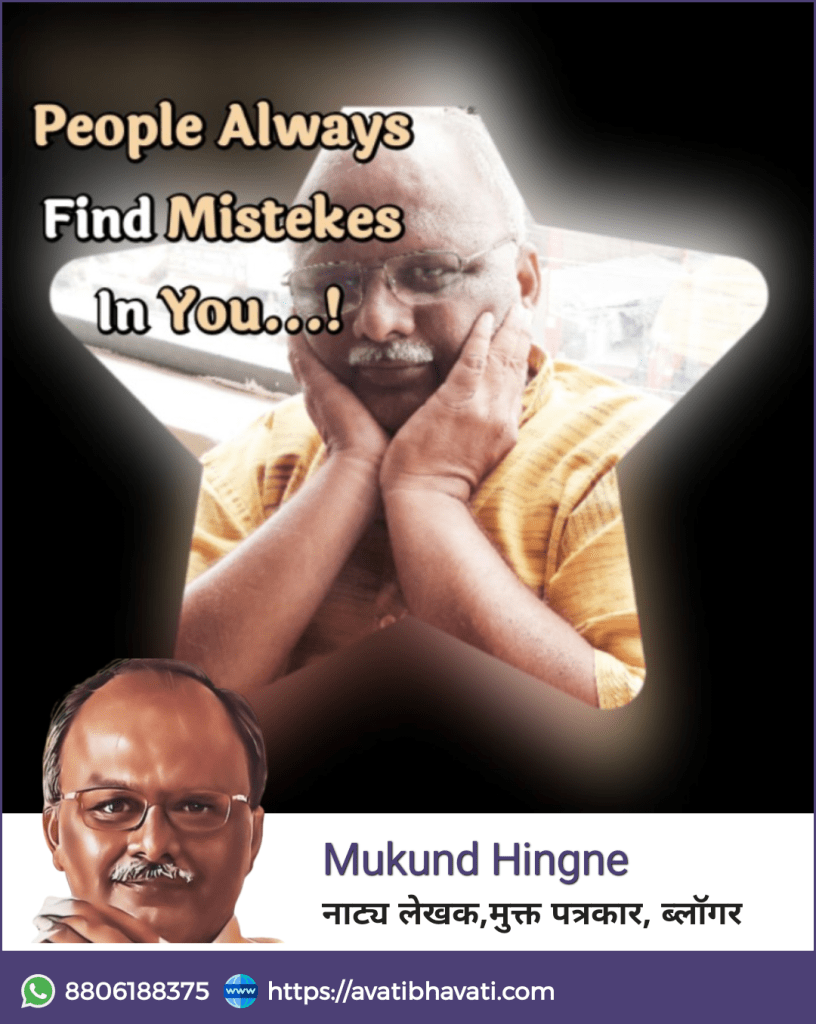
:-Mukund Madhukar Hingne.
 avatibhavati.com
यावर आपले मत नोंदवा