The meaning of the term “development” has evolved over time. In earlier times, it was primarily associated with industrial growth, road construction, or government schemes. However, in today’s era, material progress alone is not sufficient; for urban life to be truly livable, social, environmental, psychological, and cultural aspects must also be given importance. This raises a crucial question — should the initiatives implemented to simplify urban life be considered development, or should the positive changes in citizens’ lifestyles be regarded as true development?
◾The Reality and Challenges of Urban Life
The rapid wave of urbanization has led to immense population pressure in cities. Problems such as traffic congestion, pollution, waste management, water scarcity, and public health have made urban life increasingly difficult. Merely expanding infrastructure cannot be the permanent solution to these issues.
◾Measures and Their Scope
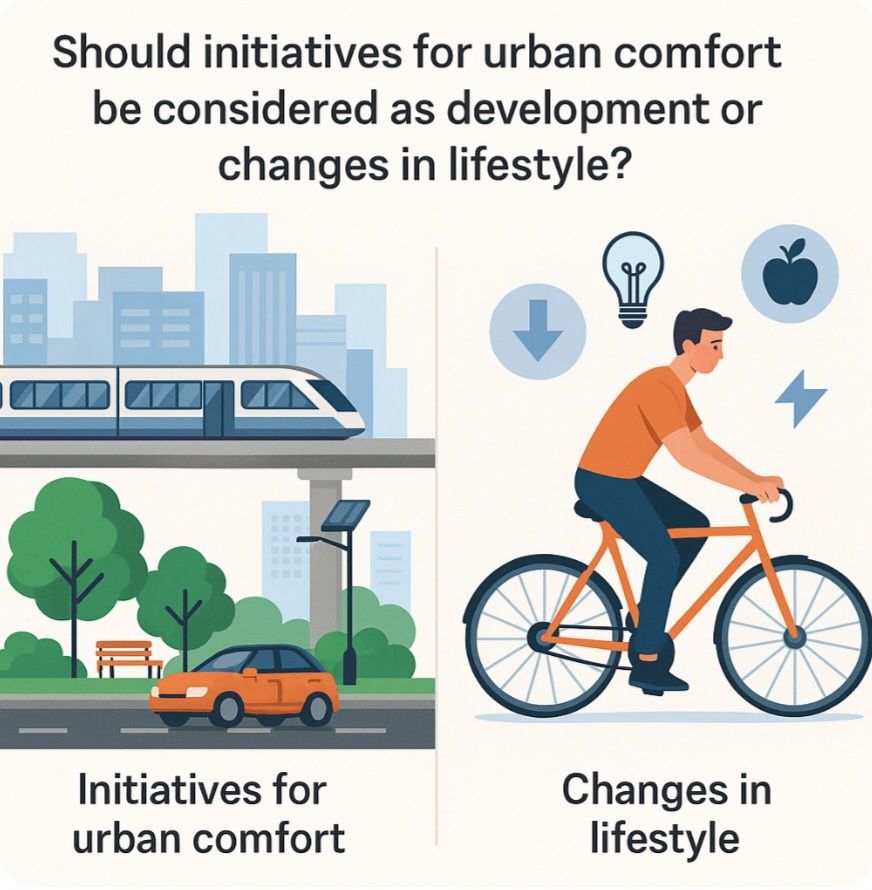
Initiatives like launching metro services, developing public parks, installing solar lights, and implementing rainwater harvesting schemes are undoubtedly useful. However, if these measures do not effectively reach the citizens, their impact remains limited. Therefore, it is essential not only to implement but to ensure effective execution.
◾Lifestyle Changes – A Self-Transformation
Using public transport more often, waste segregation, reducing energy consumption, increasing health awareness, and giving importance to physical exercise are lifestyle changes. These changes occur at an individual level but have a significant collective impact. Such changes are an essential part of development.
◾External Development or Internal Awareness?
A city may have tall buildings, roads, bridges, signals, and shopping malls, but if citizens still feel uneasy, unclean, and unsafe, then what is the purpose of such development? Hence, along with external resources, internal discipline, sensitivity, and responsibility are equally important.
◾Need for Balance Between the Two
True urban development can happen only when both infrastructure and lifestyle evolve in parallel. For example, if a bicycle track is built but people don’t use bicycles, the facility becomes ineffective. Thus, awareness must change alongside the implementation of schemes.
◾Citizen Participation – The Soul of Development
Urban development is not just the responsibility of the administration; citizens are key contributors as well. Participation from the public, local self-governing bodies, voluntary organizations, and individuals brings development to life. Every cultured action by an individual defines true development.
◾Conclusion – Redefining Development
In today’s context, development does not merely mean physical facilities. The awareness to use them, improvements in lifestyle, and the growth of social responsibility are equally important. Alongside the measures implemented to ease urban life, a responsible lifestyle that accepts and supports these efforts truly paints the picture of meaningful and sustainable development.

“जीवनशैलीतील बदल म्हणजेच विकास समजायचा का ?”
“विकास” या संकल्पनेचा अर्थ काळानुसार बदलत गेला आहे. कधीकाळी फक्त औद्योगिक वाढ, रस्त्यांची कामं किंवा शासकीय योजना यालाच विकास मानलं जायचं. पण आजच्या युगात फक्त भौतिक प्रगती पुरेशी नाही, तर नागरी जीवन सुसह्य होण्यासाठी सामाजिक, पर्यावरणीय, मानसिक व सांस्कृतिक पैलूंनाही महत्त्व दिलं जातं. अशा वेळी प्रश्न उभा राहतो की – शहर जीवन सुलभ होण्यासाठी राबवलेल्या उपाययोजना म्हणजे विकास म्हणायचा की नागरिकांच्या जीवनशैलीतील सकारात्मक बदल म्हणजे खरा विकास म्हणायचा?
◾नागरी जीवनाचे वास्तव आणि अडचणी
शहरीकरणाच्या झपाट्याने वाढलेल्या लाटेमुळे शहरांमध्ये लोकसंख्येचा प्रचंड ताण निर्माण झाला आहे. वाहतूक कोंडी, प्रदूषण, घनकचरा व्यवस्थापन, पाणीटंचाई, सार्वजनिक आरोग्य यांसारख्या अडचणींमुळे नागरी जीवन कठीण होत चालले आहे. केवळ पायाभूत सुविधांची वाढ हा या प्रश्नांचा कायमचा उपाय ठरू शकत नाही.
◾उपाययोजना आणि त्यांचा व्याप्ती
शहरात मेट्रो सेवा सुरू करणे, सार्वजनिक उद्याने उभारणे, सोलर लाईट्स बसवणे, रेन वॉटर हार्वेस्टिंगसारख्या योजना राबवणे या गोष्टी निश्चितच उपयुक्त आहेत. परंतु या उपाययोजना नागरिकांपर्यंत प्रभावीपणे पोहोचल्या नाहीत, तर त्यांचा फारसा उपयोग होत नाही. म्हणूनच, केवळ अंमलबजावणी नव्हे तर ती प्रभावी असणे गरजेचे आहे.
◾जीवनशैलीतील बदल – एक आत्मपरिवर्तन
सार्वजनिक वाहतुकीचा अधिक वापर करणे, कचरा वर्गीकरण, उर्जेचा कमी वापर, आरोग्यविषयक जागरूकता आणि व्यायामाला प्राधान्य देणे हे जीवनशैलीतील बदल आहेत. हे बदल वैयक्तिक पातळीवर घडतात पण त्याचा सामूहिक परिणाम मोठा असतो. हे बदल विकासाचा अनिवार्य भाग आहेत.
◾फक्त बाह्य विकास की अंतर्गत जाणीवा?
शहरात उंच इमारती, रस्ते, पूल, सिग्नल्स, शॉपिंग मॉल्स असतील, पण नागरिक अजूनही अस्वस्थ, अस्वच्छ आणि असुरक्षित वाटत असतील, तर तो विकास कशासाठी? म्हणून बाह्य साधनांसोबत अंतर्गत शिस्त, संवेदनशीलता, आणि जबाबदारीही गरजेची आहे.
◾दोघांमध्ये समतोल गरजेचा
उपाययोजना आणि जीवनशैली या दोन्ही अंगांनी समांतर वाटचाल झाली तरच खऱ्या अर्थाने नागरी विकास घडू शकतो. उदाहरणार्थ, सायकल ट्रॅक तयार झाला तरी नागरिक सायकल वापरत नसतील, तर ती सुविधा निष्फळ ठरते. म्हणूनच योजनांबरोबर जाणीवेतही परिवर्तन आवश्यक आहे.
◾नागरिक सहभाग – विकासाचा आत्मा
शहरी विकास केवळ प्रशासनाचे काम नाही, तर नागरिकही त्याचे घटक आहेत. लोकसहभाग, स्थानिक स्वराज्य संस्था, स्वयंसेवी संघटना आणि व्यक्तींच्या कृतीतूनच विकासाला मूर्त स्वरूप येते. प्रत्येक व्यक्तीची सुसंस्कृत कृती म्हणजेच खऱ्या अर्थाने विकास.
◾निष्कर्ष – विकासाची पुनर्मांडणी
आजच्या घडीला विकास म्हणजे फक्त भौतिक सुविधा नव्हे, तर त्या वापरण्याची जाणीव, जीवनशैलीतील सुधारणा आणि सामाजिक बांधिलकीचा विकासदेखील तितकाच महत्त्वाचा आहे. नागरी जीवन सुसह्य व्हावे यासाठी राबवलेल्या उपाययोजनांबरोबरच त्या उपायांना स्वीकारणारी जबाबदार जीवनशैली हेच खऱ्या अर्थाने समृद्ध विकासाचे चित्र रंगवते.
:-Mukund Madhukar Hingne.
 avatibhavati.com
यावर आपले मत नोंदवा