Which activities make you lose track of time?
Writing is not merely a hobby; it is a flowing journey.
Sometimes emotions trickle down, and at other times, thoughts surge like a flood.
When words begin to pour, it feels as if the clock has stopped ticking.
You lose track of how late it is or what time it might be.
Sleep doesn’t reach the eyes, yet the mind remains incredibly calm.
The day ends, and the sun of a new one rises,
but for my writing journey, the night is merely a passage in between.
✴️ 1. Writing – A Journey Beyond Time
Once the mind becomes immersed in the process of writing, time seems like a forgotten concept. Writing is not just about arranging words; it is a free-flowing stream of inner thoughts. Once these thoughts begin to flow, it feels as if the hands of the clock have stopped. The mind gets lost in the words, and the writer begins a deep dialogue with oneself.
✴️ 2. The Reason Behind Losing Track of Time
For some, losing track of time may seem unusual, but for someone engrossed in writing, it’s a natural state. Behind it lies deep concentration, the sharpness of thoughts, and a spark of inner inspiration. The outer world fades away, and the mind dwells in an entirely different realm — where only words and their emotions exist.
✴️ 3. Night – A Companion of Creativity
Night is the true companion of a writer. Silence, solitude, and unspoken emotions — these three elements are highly nurturing for writing. When the world sleeps, the mind becomes clearer and more transparent. The hours of the night are free from interruptions, which is why they become priceless for a writer.
✴️ 4. The Body Grows Weary, But the Mind Is Possessed
Often the body is tired, the eyes seek rest, but the mind refuses to stop. It is those very thoughts that guide the writer toward words. This experience is a kind of transcendence — the body remains within its physical limits, but the mind travels beyond. Sleep doesn’t feel necessary because the flow of writing feels deeper and more fulfilling.
✴️ 5. Sunrise of the Next Day – A Witness
Sometimes the writing becomes so immersive that dawn arrives unnoticed. The rising sun becomes a silent witness to the writer’s all-night vigil. The light of a new day, the lingering words in the mind, and the satisfaction of completed writing — all come together to create a deep, spiritual calm. This moment becomes a sacred joy for the writer.
✴️ 6. Writing – A Lifestyle or a Devotion?
All of these experiences show that writing is not merely an art or a hobby; it is a way of life. When one begins to see their identity reflected in words, then time, place, and physical limitations cease to matter. Writing begins to feel like a form of spiritual practice — where every line holds a part of the soul, and every night brings a renewed sense of purpose.
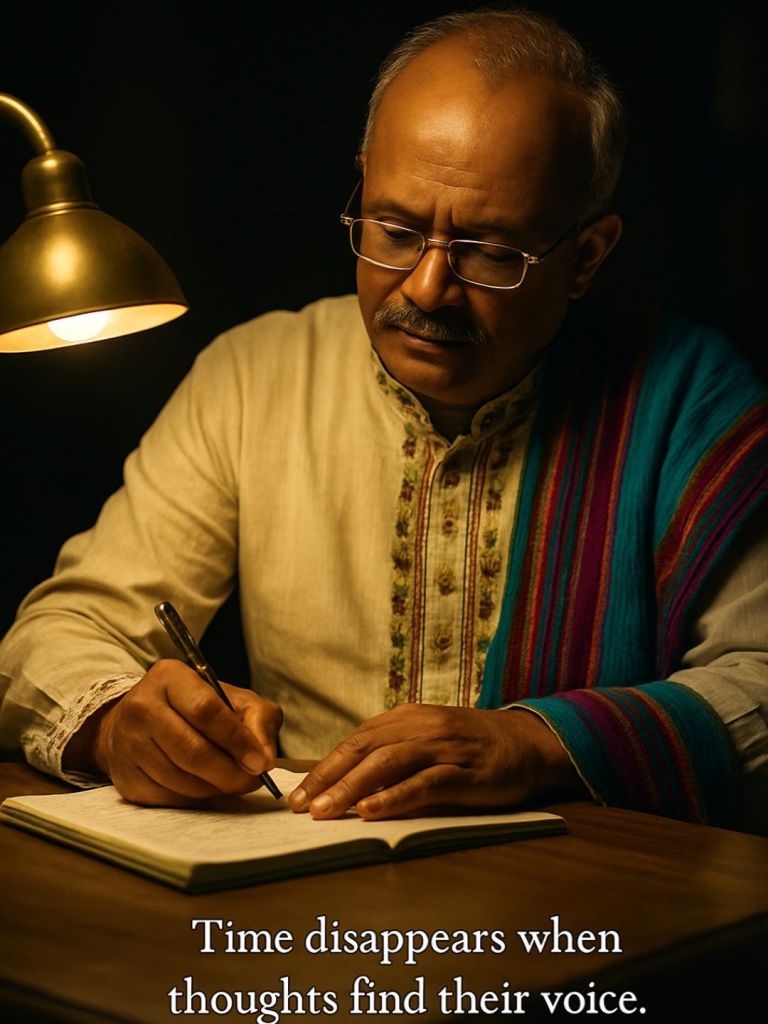
“शब्द सुचू लागले की वेळेचं भान रहात नाही…!”
कोणत्या गतिविधींमध्ये तुम्हाला वेळेचं भान राहत नाही?
लेखन हा केवळ छंद नसतो, तो एक प्रवाह असतो.
कधी भावना ओघळतात, तर कधी विचारांचा पूर उसळतो.
शब्द सुचू लागले की घड्याळ थांबून गेल्यासारखं वाटतं.
रात्र किती झाली, वेळ किती वाजला, याचं भानही राहत नाही.
डोळ्यांत झोप नसते, पण मन मात्र विलक्षण शांत असतं.
दिवस संपतो आणि दुसऱ्या दिवसाचा सुर्य उगवतो,
पण माझ्या लेखनप्रवासाचा रात्र हे केवळ एक मधले टप्पा असतो.
✴️ १. लेखन – काळाच्या पलिकडचा प्रवास
लेखनाच्या प्रक्रियेत एकदा का मन गुंतलं, की वेळ नशिबानेच विसरलेली वाटते. लेखन म्हणजे केवळ शब्दांची रचना नव्हे, तर अंतर्मनातील विचारांचा मुक्त प्रवाह असतो. एकदा का हे विचार वहायला लागले, की घड्याळाचे काटे थांबल्यासारखे भासतात. मन शब्दांमध्ये हरवतं, आणि लेखक स्वतःशीच संवाद साधू लागतो.
✴️ २. वेळेचं भान हरवण्यामागचं कारण
आपल्याला वेळेचं भान न राहणं हे अनेकांना विचित्र वाटू शकतं, पण लेखनात गुंतलेल्यांसाठी ही एक नैसर्गिक स्थिती असते. यामागे असते मनाची एकाग्रता, विचारांची धार, आणि आतून येणारी प्रेरणा. बाहेरचं जग दूर लोटून, मन एका वेगळ्याच विश्वात रममाण होतं — जिथे फक्त शब्द आणि त्यांच्या आंतरिक भावना असतात.
✴️ ३. रात्र म्हणजे सर्जनशीलतेचा साथीदार
रात्र ही लेखकाची सच्ची सखी असते. शांतता, एकांत, आणि अव्यक्तता — या तीन गोष्टी लेखनासाठी अत्यंत पोषक असतात. जेव्हा सर्व जग झोपलेलं असतं, तेव्हा मन जास्त स्पष्ट आणि पारदर्शक होतं. रात्रीचे हे तास लेखनासाठी अडथळ्यांपासून मुक्त असतात, आणि म्हणूनच लेखकासाठी ते अमूल्य ठरतात.
✴️ ४. शरीर थकलेलं असतं, पण मन झपाटलेलं
अनेकदा शरीर थकलं असतं, डोळे मिटू पाहतात, पण मनातले विचार थांबत नाहीत. तेच विचार लेखकाला शब्दांकडे नेतात. हा अनुभव एक प्रकारचा transcendence असतो — शरीर भौतिक मर्यादांत असतं, पण मन त्याच्या पलिकडे जातं. झोप ही गरज वाटत नाही, कारण लेखनाचा प्रवाह अधिक गहिरा वाटतो.
✴️ ५. दुसऱ्या दिवसाचं सूर्योदय – एक साक्ष
कधी कधी लेखनात इतकं गुंतलं जातं की उजाडतंही कळत नाही. समोरून येणारा सुर्योदय हा लेखकाच्या जागराचा साक्षीदार असतो. दुसऱ्या दिवसाचा उजेड, मनात गूंजणारे शब्द, आणि पूर्ण झालेल्या लिखाणाचं समाधान — यामध्ये एक अद्भुत शांतता असते. हा क्षण लेखकासाठी एक आत्मिक सुखद अनुभव ठरतो.
✴️ ६. लेखन – जीवनशैली की साधना?
या सगळ्या अनुभवांतून असं लक्षात येतं की लेखन ही केवळ कला किंवा छंद नाही, तर ती एक जीवनशैली आहे. जेव्हा शब्दांतच स्वतःचं अस्तित्व उमगायला लागतं, तेव्हा वेळ, जागा, किंवा शारीरिक मर्यादा या सगळ्या गोष्टी अप्रस्तुत ठरतात. लेखन हे मग साधनेसारखं वाटू लागतं — जिथे प्रत्येक ओळीमध्ये आत्मा झरतो, आणि प्रत्येक रात्र एक नवी ऊर्जा देऊन जाते.
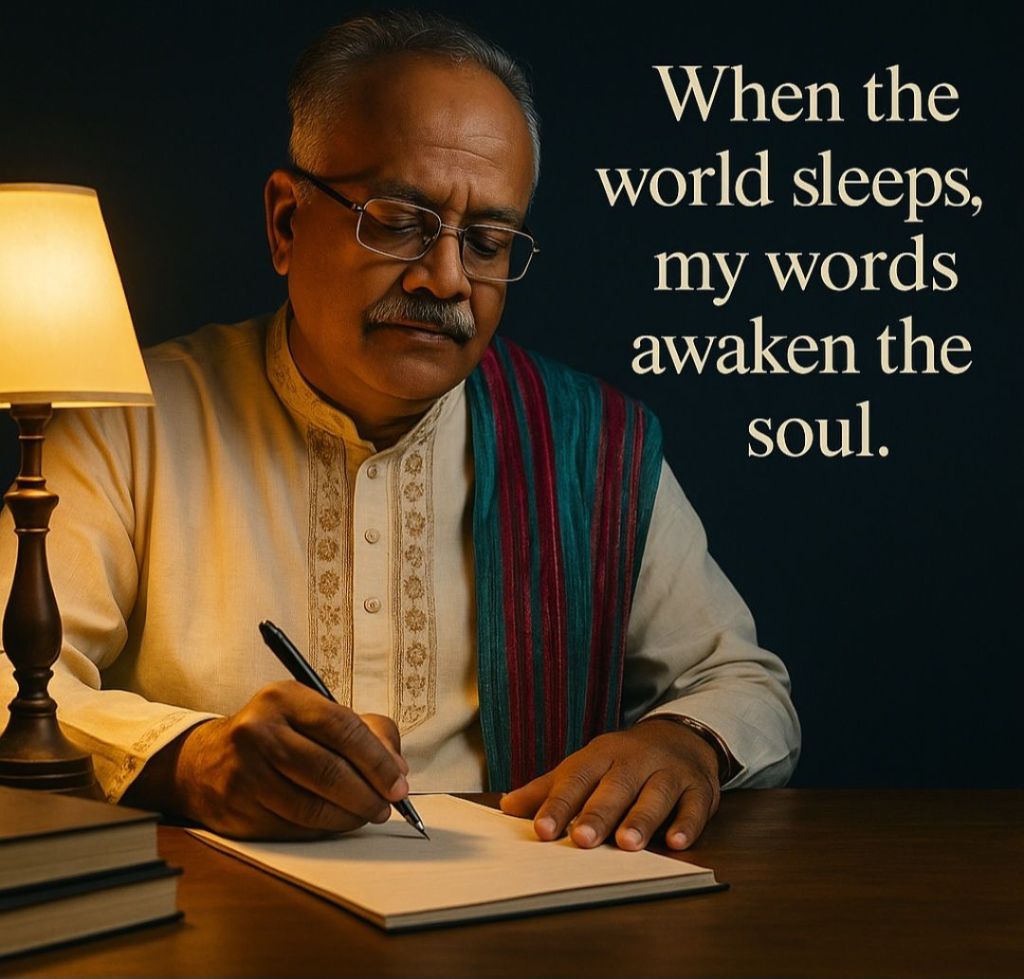
:-Mukund Madhukar Hingne.
 avatibhavati.com
Leave a reply to मुकुंद हिंगणे उत्तर रद्द करा.