“Religion should remain a private and personal matter for every individual” — this belief forms the foundation of secularism in any democratic society. In a country like India, where multiple religions, castes, sects, and cultural identities coexist, the value of secularism becomes even more vital. Secularism seeks to create unity from this diversity by compelling the state and its machinery to treat all religions with equal respect and impartiality.
However, in practice, implementing these ideals is often fraught with challenges. Religion rarely remains confined to the realm of personal faith; it frequently becomes a powerful socio-political force. Especially in contexts where a particular religion forms the majority, political players are often tempted to use religious sentiments to consolidate power. As a result, religion is subtly — and at times, overtly — woven into the strategies of governance and control.
Today, we live in a society that appears, on the surface, to be secular and modern. But if we scratch beneath this surface, we find that power, politics, and public opinion are still deeply influenced — even dominated — by intense religious undercurrents. Thus, no matter how committed we appear to secularism in principle, the harsh truth remains: at the core of political power often lies a strong current of fanatic religiosity. Recognizing and confronting this reality is crucial for preserving true democratic values.
The use of religion in the equations of power is not new, but when it is taken to extremes, it hampers the harmony of society. Therefore, no matter how much we uphold secularism, if the core of power falls into the grip of fanatic religiosity, democracy is strangled. Only an alert and rational citizenry can serve as a remedy to this.
- Purpose of Secularism :-
- To show equal respect toward all religions
- To avoid any discrimination based on religion
- For the rulers to maintain a secular outlook
- To guarantee freedom of religion
However, implementing these ideals in practice is difficult—especially when society is emotionally divided along religious lines.
- Fanatic Religiosity :-
- Emotion-driven politics: Religious sentiments of the people can be easily provoked. Knowing this, those in power often exploit religion to gain authority.
- “Us” vs. “Them”: An attempt is made to create social unity by dividing people along religious lines.
- Majoritarian strategy: By representing the majority religion, minorities are made to feel secondary, and a particular group becomes politically dominant.
- Merging religion with power: Historically too, many rulers used religious leaders to strengthen their rule.
- Historical and International References :-
- In India, the Mughals, the Peshwas, and even the British used religion to control society.
- Globally, from Hitler to Islamic regimes in the Middle East, religion has been used as a tool to run governments.
- Even in countries like the USA, Germany, and Russia, subtle connections between religion and politics can be observed.
- Impact on Modern Society :-
- Religious polarization increases tension within society.
- Intellectual diversity diminishes, and extremism grows.
- Decisions are made emotionally or with bias rather than based on constitutional values.
- Ultimately, the secular state remains only on paper, while religious politics prevails in reality.
- Solutions and the Need for Awareness :-
- Society must clearly understand the distinction between religion and power.
- Schools and colleges should provide education on secularism.
- Media should act responsibly—encouraging rational dialogue instead of shallow religious debates.
- Voters must choose candidates based on issues like development, education, and healthcare rather than religion.
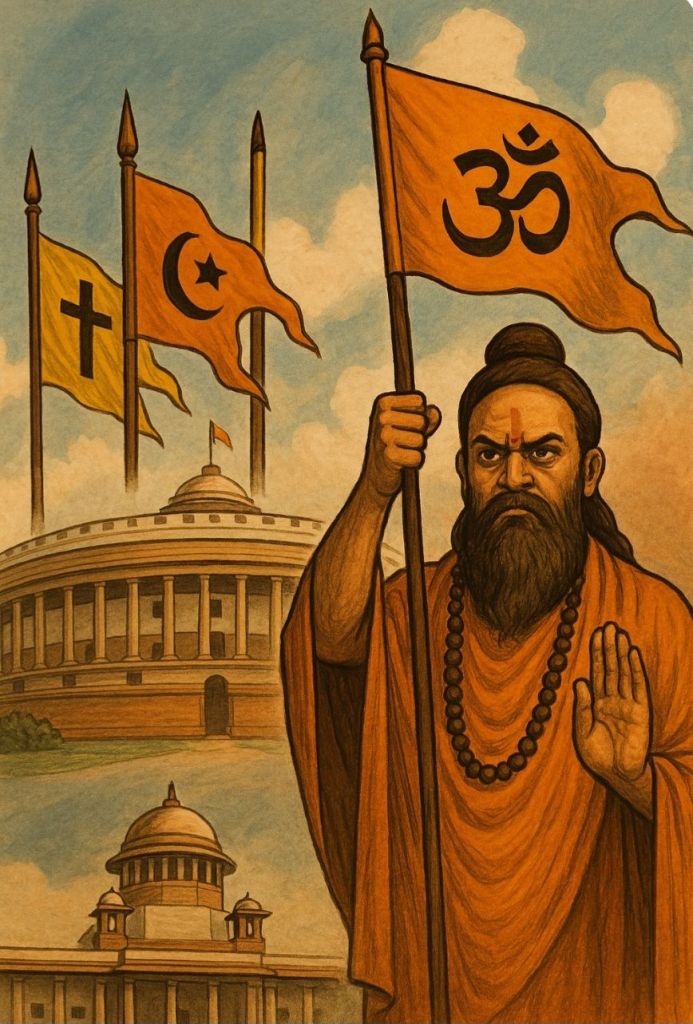
“कितीही निधर्मीवाद जोपासला तरी कडवी धार्मिकताच सत्तेचा गाभा असते…!”
“धर्म हा प्रत्येक व्यक्तीचा खाजगी आणि वैयक्तिक प्रश्न असावा” असा विचार करत निधर्मीवाद ही संकल्पना लोकशाही समाजरचनेचा मूलाधार ठरली आहे. भारतासारख्या बहुधार्मिक देशात तर धर्मनिरपेक्षतेचे मूल्य अधिकच महत्त्वाचे ठरते. कारण इथे विविध धर्म, पंथ, जाती आणि सांस्कृतिक प्रवाह सहअस्तित्वात आहेत. अशा विविधतेतून ऐक्य साधण्याचे काम निधर्मीवाद करतो. तो राज्यकर्त्यांना सर्व धर्मांशी समान व समदृष्टीने वागण्यास बांधील करतो.
मात्र प्रत्यक्ष व्यवहारात या मूल्यांचा अंमल करताना अनेकदा अडथळे येतात. कारण धर्म ही संकल्पना केवळ श्रद्धेपुरती मर्यादित राहत नाही; ती एक जबरदस्त राजकीय आणि सामाजिक शक्ती म्हणूनही वापरली जाते. विशेषतः जेंव्हा एखादा धर्म बहुसंख्याक असतो, तेंव्हा त्या धर्माच्या भावनांना डोळ्यांसमोर ठेवून सत्ता खेचण्याचा मोह अनेकांना होतो. परिणामी, धर्माचा वापर सत्तेच्या समीकरणात मोठ्या कौशल्याने केला जातो.
आजघडीला आपण ज्या समाजव्यवस्थेत वावरतो ती वरवर पाहता निधर्मी आणि आधुनिक वाटते, पण तिच्या मुळाशी डोकावून पाहिल्यास राजकारण, समाजकारण आणि सत्ता यामागे कडव्या धार्मिकतेचा ठसा स्पष्टपणे जाणवतो. त्यामुळे आपण कितीही निधर्मीतेचे बुरखे पांघरले, तरी प्रत्यक्षात सत्तेचा गाभा कट्टर धार्मिकतेच्या ऊर्जेवरच कार्यरत असल्याचे वास्तव आपल्याला स्वीकारावे लागते.
सत्तेच्या समीकरणात धर्माचा वापर हा नवा नाही, पण त्याचा अतिरेक झाल्यास समाजाच्या सुसंवादाला बाधा पोहोचते. म्हणूनच, कितीही निधर्मीवाद आपण जोपासला तरी, कडव्या धार्मिकतेच्या विळख्यात सत्तेचा गाभा सापडल्यास लोकशाहीचा गळा घोटला जातो. सजग आणि विवेकी नागरिकच याला पर्याय ठरू शकतो.
१. निधर्मीवादाचा उद्देश :-
- सर्व धर्मांप्रती समान आदर ठेवणे
- धर्माच्या आधारावर कोणताही भेदभाव न करणे
- शासनकर्त्यांनी धर्मनिरपेक्ष दृष्टिकोन बाळगणे
- धार्मिक स्वातंत्र्याची हमी देणे
- परंतु, हे आदर्श तत्त्व व्यवहारात लागू करणे कठीण जातं, विशेषतः जेव्हा समाज धर्माच्या आधारावर भावनिकदृष्ट्या विभागलेला असतो.
२. कडवी धार्मिकता :-
- भावनांवर आधारित राजकारण :- लोकांच्या धार्मिक भावना सहजपणे भडकवता येतात. हे जाणून सत्ताधारी धर्माचा वापर करत सत्ता मिळवतात.
- ‘आपण’ विरुद्ध ‘ते’: धर्माच्या आधारे समाजात द्वैत निर्माण करून एकजूट साधण्याचा प्रयत्न केला जातो.
- बहुसंख्याकवादाची रणनीती : बहुसंख्याक धर्माचे प्रतिनिधित्व करून अल्पसंख्याकांना दुय्यम ठरवले जाते, आणि त्यामुळे एक ठरावीक वर्ग राजकीयदृष्ट्या प्रभावी होतो.
- धर्म आणि सत्ता यांचे एकत्रीकरण: इतिहासात देखील, अनेक सम्राटांनी धर्मगुरूंचा वापर करून आपली सत्ता अधिक बळकट केली होती.
३. ऐतिहासिक आणि आंतरराष्ट्रीय संदर्भ :-
- भारतात मुघल, पेशवे, आणि इंग्रजही धर्माचा वापर करून समाज नियंत्रित करत होते.
- जगभरातही हिटलरपासून ते मध्यपूर्वेतील इस्लामिक राष्ट्रांपर्यंत धर्माच्या नावावर सत्ता चालवली गेली.
- अमेरिका, जर्मनी, रशिया अशा अनेक देशांत देखील धर्म आणि राजकारण यांचं सूक्ष्म नातं आढळतं.
४. आधुनिक समाजात त्याचे परिणाम :-
- धार्मिक ध्रुवीकरणामुळे समाजात तणाव वाढतो.
- वैचारिक विविधता नष्ट होते आणि कट्टरता वाढते.
- संविधानिक मूल्यांवर आधारित निर्णय ऐवजी भावनिक, पक्षपाती निर्णय घेतले जातात.
- शेवटी, निधर्मी राज्य हे केवळ कागदावर उरतं; प्रत्यक्षात धार्मिक राजकारण चालतं.
५. उपाय आणि सजगतेची गरज :-
- समाजाने धर्म आणि सत्तेतील भेद स्पष्ट समजून घ्यावा.
- शाळा-कॉलेजांमध्ये धर्मनिरपेक्षतेचे शिक्षण द्यावे.
- प्रसारमाध्यमांनी जबाबदारीने काम करावे – धर्माच्या नावाने उथळ चर्चांऐवजी विवेकी संवाद साधावा.
- मतदारांनी धर्माऐवजी विकास, शिक्षण, आरोग्य अशा मुद्द्यांवर मतदान करावे.

:-Mukund Madhukar Hingne.
 avatibhavati.com
Leave a reply to मुकुंद हिंगणे उत्तर रद्द करा.